




【Hebei Steel】Industry Profit Exceeds RMB 28 Billion in 11 Months, Up 16.8 Times

Graphite electrodes are the "lifeline" of EAF steelmaking! As the core material for arc conduction and heating, they feature high conductivity and heat resistance, directly affecting molten steel quality and output. Mastering graphite electrodes means mastering the initiative in EAF steelmaking!
【Hebei Steel】Industry Profit Exceeds RMB 28 Billion in 11 Months, Up 16.8 Times
In China's industrial landscape, "steel" has always been one of Hebei's most distinctive labels, with the province accounting for one-fifth of the nation's total production capacity.
In the past, Hebei's steel industry was often labeled as "big but not refined," associated with "high energy consumption" and "extensive development." Today, however, a brand-new label is being deeply integrated into this "giant" traditional industry: Hebei's comprehensive computing-power index has ranked first nationwide for two consecutive years, with artificial-intelligence computing power growing especially fast. Steel-industry large models have become one of the strongest driving forces behind the industry's move toward high-end development.
On December 30, news that excited the entire national steel industry arrived — Hebei Province's Steel Industry Vertical Large-Model Application Service Platform has completed system development and is about to be put into operation.
The world looks to China for steel, and China looks to Hebei. As the 14th Five-Year Plan period draws to a close, how will Hebei steel — "No.1 in output nationwide" — combined with Hebei's new label of "No.1 in computing power nationwide," calculate a new high-quality development ledger?
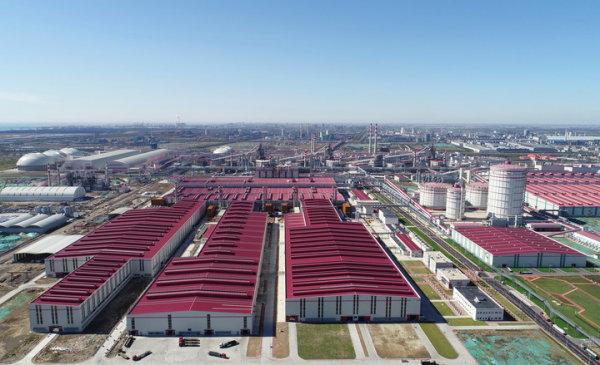
01 "Calculating" the Economic Account of Quality Improvement and Efficiency Enhancement
On December 25, reporters visited the Intelligent Control Center of Hebei Yongyang Special Steel Group Co., Ltd. (hereinafter "Yongyang Special Steel"). On a massive screen, strings of numbers and curves were jumping in real time, displaying the operating status of every stage of steel smelting.
"In the past, steelmaking relied entirely on the experience of veteran workers. Now we rely on data to make precise calculations," said Dai Ziwei, Director of the Enterprise Management Department of Yongyang Special Steel, pointing to the screen. After carefully observing the real-time monitoring footage, reporters found that the converter operating area, which used to be full of flying sparks and busy workers, was now devoid of people. "Footsteps have stopped, but data is running," Dai said. "Behind this contrast of stillness and movement is a ledger of quality improvement and efficiency gains."
"In February 2025, the 'Intelligent Steelmaking Large Model' we launched was like a learning, predictive 'super AI steelmaker.' Once this 'AI steelmaker' went online, it was remarkable: it could replace manual operations and achieve 'one-click steelmaking,' increasing the converter end-point carbon qualification rate from 75% to 97%," Dai said. This is a key technical indicator in the steelmaking process — simply put, it measures the probability that the carbon content of molten steel hits the target range in a single attempt when smelting ends. The more precise the carbon control, the more heats succeed in one go, and the higher the qualification rate.
Converter steelmaking is a complex "black-box" chemical reaction process — high-pressure oxygen is blown into high-temperature molten iron in a giant converter, completing decarburization, temperature rise, and impurity removal in just five minutes. Because each batch of molten iron differs in composition and temperature, even tiny changes in oxygen flow or lance height during blowing can affect the accuracy of the end-point carbon content.
"Manual steelmaking mainly relies on experienced workers observing flames and judging sounds, which leads to unstable production. A 75% qualification rate is already close to the ceiling," Dai said.
"Our large model has 'learned' from 200,000 heats of stable and reliable historical smelting data, processing tens of thousands of sensor data points per second and dynamically adjusting the blowing curve, applying 'one strategy per heat' and providing optimal control schemes in advance to achieve precise hits," Dai calculated for the reporters: raising the end-point carbon qualification rate from 75% to 97% means less heat and raw-material loss, which directly translates into cost savings — average steel material consumption per ton of steel fell by 4.5 kilograms, the smelting cycle was shortened from 35 minutes to 30 minutes, and when converted, the cost per ton of steel dropped by more than RMB 20.
This ledger of quality and efficiency is becoming ever clearer for many Hebei steel enterprises —
At HBIS Tangsteel, the "Integrated Production Scheduling Large Model" shortened raw-material inventory turnover from 10 days to 5 days, and reduced hot-rolling and cold-rolling manufacturing cycles by 5 days and 2 days respectively, creating more than RMB 10 million in benefits each year;
At HBIS Handan Iron & Steel, supported by the "Quality Large Model," the qualification rate of key products increased by 8%, reducing annual losses by RMB 12.6 million;
At Shougang Qian'an Steel, after artificial-intelligence models were introduced into production control, the company saved RMB 70 million in costs annually and cut carbon-dioxide emissions by 40,200 tons per year;
…
Data from the Hebei Provincial Department of Industry and Information Technology show that all steel enterprises in the province have now applied AI large models to varying degrees, and more than half are deepening their use in industrial intelligent control. As of December 2025, three steel vertical large models have been registered with the Cyberspace Administration of China.
The resulting benefits are also obvious: from January to November 2025, total profits of Hebei's steel industry reached RMB 28.135 billion, up 16.8 times year-on-year, and profit per ton of steel was 26.25% higher than the national average.
"Every optimization of every data point corresponds to real profit," Dai told reporters. "Digital-intelligence transformation is not a money-burning old path — it is a new path to making money."
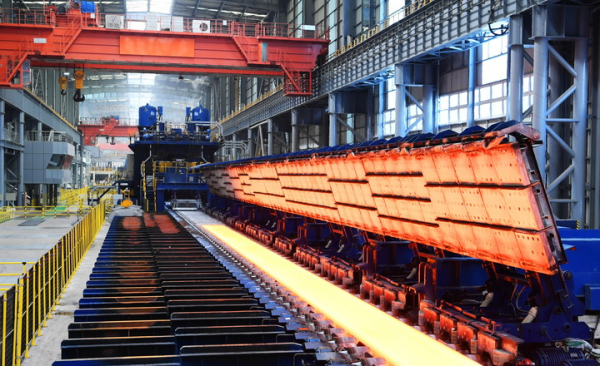
02 "Calculating" the Innovation Ledger of Transformation and Upgrading
The economic ledger of quality and efficiency in workshops reflects the steel industry's urgent need for transformation and upgrading. So how will steel large models support a future-oriented innovation ledger?
The foundation of this ledger is a powerful computing-power engine — as of the third quarter of 2025, Hebei had 2.245 million racks in operation, accounting for 17.96% of the national total; intelligent-computing capacity reached 249 EFLOPS (10^18 floating-point operations per second), accounting for 23.65% nationwide. Data centers densely deployed in Zhangjiakou, Langfang, Shijiazhuang, and other cities together form a computing-power network that supports the high-speed operation of the "steel brain."
The strong steel-industry base is the heavy "original asset" on this ledger. Wang Guodong, Academician of the Chinese Academy of Engineering and Professor at Northeastern University's School of Materials Science and Engineering, once led a team that deeply participated in the R&D of Yongyang Special Steel's "Intelligent Steelmaking Large Model." He said Hebei's steel industry is massive, and every link — production, logistics, and others — generates huge amounts of data day and night. Even a one-percentage-point improvement in process optimization can bring economic value in the hundreds of millions of yuan. "This kind of industrial scenario — with both steel and data, clear pain points and urgent needs — provides fertile ground for new technologies to land, allowing innovations from the laboratory to be verified in real production."
Taking Yongyang Special Steel as an example, Northeastern University's team provided the "core algorithms" for the steelmaking "smart brain," while Huawei Technologies built a local private cloud for the enterprise, providing reliable CPU computing power — equivalent to building a secure, dedicated "local highway." When the "smart brain" requires intensive learning, it accesses massive GPU computing power through China Unicom Hebei's "cloud supercomputing center." This "local + cloud" collaborative architecture allows the "smart brain" to think securely while also gaining enormous computing-power support, accelerating the pace of innovation for steel enterprises.
At present, leading digital-technology companies such as Huawei, Alibaba, and ZTE, along with research teams from Northeastern University, Yanshan University, and Hebei University of Technology, are injecting sparks of cutting-edge technological wisdom into the torrent of steel in this industry–academia–research "digital smelting," illuminating the transformation path of Hebei's steel industry.

03 "Calculating" the Long-Term Ledger of Industry-Wide Win-Win Development
After settling the current efficiency ledger and laying a solid innovation foundation, Hebei is now looking further ahead, aiming to "build a world-class modern steel industry" and carefully planning a long-term ledger concerning overall industrial development and lasting competitiveness.
This ledger is not about short-term profits and losses, but about how, when "No.1 in output" meets "No.1 in computing power," the two advantages can be deeply integrated to enhance the long-term competitiveness of China's steel industry.
"The widespread flowering of steel large models across Hebei is backed by clear goals and strong top-level design," said Liu Jing, member of the National Expert Committee on Intelligent Manufacturing. Hebei has proactively laid out computing-power infrastructure and introduced special action plans such as "AI + Steel," with intrinsic demand and policy support enabling steel enterprises to leap from "smelting steel" to "smelting data."
"The current results prove Hebei's capability to move from building computing power to industrial application, but the future challenge lies in how to transform its computing-resource advantage into sustainable industrial competitiveness and value-creation advantage," Liu said. At present, steel large-model applications are mainly concentrated in capital- and technology-strong leading enterprises such as HBIS. How to deliver computing-power dividends to the vast number of small and medium-sized steel enterprises in standardized, modularized, low-cost ways to form an ecosystem where "ten thousand trees make a forest" is the next focus.
The key to Hebei steel's long-term ledger lies in "inclusiveness" and "sharing." Zhang Xiaohui, Director of the Steel Division of the Hebei Provincial Department of Industry and Information Technology, told reporters that on one hand, to ensure more small and medium-sized steel enterprises can keep up, Hebei is piloting the issuance of "computing-power vouchers," providing real financial subsidies for enterprises to purchase computing services and lowering the initial cost of applying large-model technologies. On the other hand, it is building a public "smart brain" to support digital-intelligence transformation for SMEs by constructing the Hebei Steel Industry Vertical Large-Model Application Service Platform, enabling enterprises to use intelligent services as conveniently and cheaply as water and electricity.
According to relevant work plans, the Hebei Steel Industry Vertical Large-Model Application Service Platform, whose system development has been completed, will achieve full coverage of key steel enterprises in pilot cities in 2026 and expand to provincial industrial clusters, extend to steel enterprises across North China from 2028, and expand nationwide by 2030.
"Let Hebei's computing power not only produce better steel for itself, but also turn intelligent solutions into products that can be exported, leading the national steel industry to explore effective transformation paths," Zhang Xiaohui said.
From focused support to universal empowerment, this long-term ledger charts the path from single-point breakthroughs to overall leaps, and envisions the transformation from a major steel province to a strong steel province.
When the three ledgers derived from the deep integration of Hebei's two "national No.1" strengths — steel and computing power — are tallied, the heavy assets and large scale of traditional industries are no longer burdens, but fertile soil for cultivating new productive forces. This profound industrial transformation not only demonstrates the firm exploration of a major steel province in transformation, but will also provide a "Chinese solution" that others can draw upon for the intelligent and green leap of the global steel industry.
Feel free to contact us anytime for more information about the EAF Steel market. Our team is dedicated to providing you with in-depth insights and customized assistance based on your needs. Whether you have questions about product specifications, market trends, or pricing, we are here to help.
No related results found




0 Replies