




【Global Steel Market Insight】Rebar Supply Bottlenecks Persist, Prices Remain Firm Worldwide

Graphite electrodes are the essential consumables in EAF steelmaking. Due to their outstanding electrical conductivity and excellent high-temperature resistance, they play a critical role in ensuring efficient and stable furnace operation, thereby improving steel production capacity and product quality.
【Global Steel Market Insight】Rebar Supply Bottlenecks Persist, Prices Remain Firm Worldwide
Key Conclusions
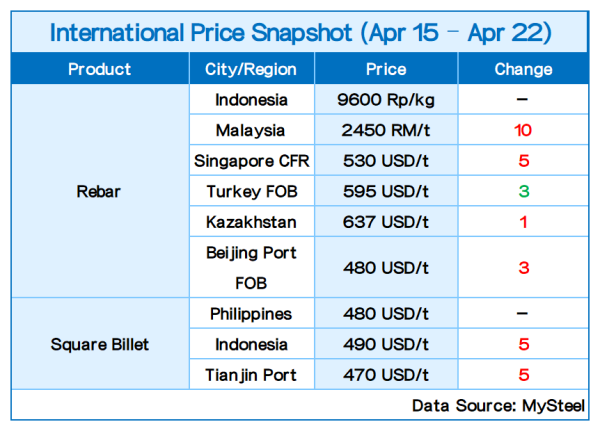
Based on this week's market developments, rebar supply in Dubai remains tight, with smaller mills supplementing the market and the price gap with major mills narrowing. Prices in Central Asia are generally stable, with more inquiries but limited transactions. The Southeast Asian market continues to show a stable-to-strong trend: post-holiday demand recovery expectations in Laos are strong; Singapore prices rose by USD 5/ton week-on-week; Malaysia prices strengthened due to tight supply and rising freight costs; Indonesia remains stable at high levels. In Turkey, rising freight costs have pushed up scrap prices, but weak demand has resulted in sluggish quotations.
At domestic ports and border crossings, transactions for Chinese standard (GB) rebar exports are moderate, while British standard (BS) quotations are relatively firm. Due to tight mill supply at various ports, prices remain strong.
Overall, rebar supply remains tight across multiple global regions, with strong cost support, while demand shows divergence.
International Price Snapshot
Global Hot Topics
1. Vietnam's Hoa Phat Group recorded steel product sales of 3 million tons in Q1, up 26% year-on-year, continuing its expansion trend. Sales of construction steel and high-quality steel reached approximately 1.4 million tons, up 20% YoY; hot-rolled coil (HRC) sales also reached about 1.4 million tons, surging 48% YoY, with approximately 80% sold in the Chinese market. Demand growth is mainly driven by the domestic market. The company's full-year output is expected to exceed 13 million tons, with crude steel capacity projected to reach 16 million tons by the end of 2026.
2. On April 20, India's JSW Steel announced that its board has approved the formation of a joint venture with South Korea's POSCO Group, with each holding a 50% stake, to build a green integrated steel plant with an annual capacity of 6 million tons in Odisha, eastern India. JSW Steel's wholly owned subsidiary, Saffron Resources Pvt Ltd, will be converted into this 50:50 joint venture. The transaction is expected to be completed by December 31, 2026.
3. On April 20, the CEO of Cleveland-Cliffs stated that due to ongoing geopolitical tensions and production cuts in the aluminum sector, the trend of substituting steel for aluminum is strengthening. The U.S.-Iran conflict has disrupted major aluminum producers in the Persian Gulf, including production losses, which is expected to place additional pressure on the North American market, already facing tight supply due to U.S. tariff policies.
4. On April 17, Indian government officials announced that India and New Zealand will sign a Free Trade Agreement (FTA) on April 27. The agreement aims to provide duty-free access for domestic exporters to the island nation's market and is expected to generate USD 20 billion in investment over the next 15 years.
5. The U.S. Department of Commerce (DOC) announced the revocation of anti-dumping duties (AD) on certain cold-rolled steel flat products from the United Kingdom. The review period covers September 1, 2024, to August 31, 2025, and the review was initiated on December 8, 2025. Authorities concluded that the UK did not suspend entries of the subject merchandise during the review period.
International Trade Barriers
1. On April 13, the European Commission announced that the European Parliament and the Council of the European Union have reached an agreement on new steel trade measures to address surging imports and global overcapacity. The new measures will replace the safeguard system in place since 2019 and are scheduled to take effect on July 1, 2026. The new mechanism will strengthen the tariff-rate quota (TRQ) system: imports within 18.3 million tons per year will remain duty-free, while tariffs on excess volumes will increase from 25% to 50%. Meanwhile, duty-free quotas will be reduced by approximately 47% compared to 2024 levels.
2. On April 15, the World Trade Organization (WTO) stated that Kazakhstan has requested dispute consultations with Indonesia regarding import tariffs imposed on hot-rolled coil (HRC) from Kazakhstan. Kazakhstan argues that Indonesia's additional 20% ad valorem tariff violates its obligations under certain WTO agreements.
3. The International Emissions Trading Association (IETA) has urged EU member states to accelerate preparations for a new EU carbon market covering buildings and road transport. It warned that inconsistent national rules could lead to fragmentation before the system launches in 2028. IETA officials emphasized that harmonized transposition of the EU Emissions Trading System Phase II (ETS2) into national law is critical to maintaining market credibility and enabling early revenue realization and access to the Social Climate Fund.
4. India's competition regulator, the Competition Commission of India (CCI), has found that seven regional steel associations violated antitrust laws in a price manipulation investigation. These include the Jalna Steel Association, Hyderabad Rolling Mills Association, G Manufacturers Association, Raipur Angle Association, Chhattisgarh Steel Association, Raipur TMT Association, and Mandi Gobindgarh Furnace Association. The regulator is also investigating major steelmakers including Tata Steel, JSW Steel, SAIL, and Rashtriya Ispat Nigam for alleged collusion between 2018 and 2023.
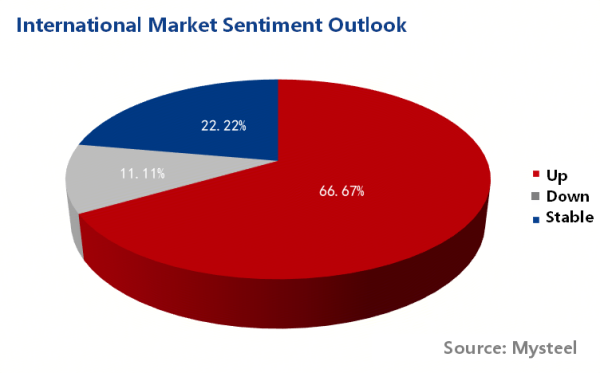
Market Sentiment Outlook
Voices from the Global Steel Market
I. International Markets
1. Middle East Market
Dubai: This week, rebar quotations from ASAS and AGSI mills stood at AED 2,880/ton, with the price gap versus major local mills narrowing by about AED 50/ton. UNION and ESI mills quoted rebar at AED 2,950/ton. The main issue remains tight supply. Smaller mills have raised prices in line with the market. GULF Steel quoted AED 2,900/ton this week; however, its production is unstable, with relatively low output and inventory turnover cycles of only about two days.
It is understood that GULF is a small local mill in Abu Dhabi. Previously, its resources were not available to the market, but due to current shortages, they are now being released as supplementary supply.
In addition, billets from Oman are still unable to enter Dubai, as the strait remains blocked. In the short term, supply tightness is unlikely to ease.
2. Central Asia and Mongolia Market
Kazakhstan: In Almaty, local rebar spot prices are at KZT 300,000–320,000/ton, remaining stable. Market prices are reportedly opaque, with significant price differences depending on customer segments.
Uzbekistan: In Tashkent, local rebar spot prices are around UZS 8 million/ton, with limited fluctuations.
Kyrgyzstan: As of April 21, rebar prices in Bishkek are around KGS 56,000/ton, with many inquiries but few transactions.
Mongolia: Rebar is priced at MNT 2.12 million/ton, while wire rod is around MNT 4.22 million per bundle. Market transactions have been weak recently, with prices remaining stable.
3. Southeast Asia Market
Laos: This week, mainstream local rebar prices are around RMB 4,060/ton. With the Lao New Year holiday ending, end-user activity is gradually recovering, and spot prices are expected to strengthen.
Singapore: Current rebar prices stand at USD 530/ton, up USD 5/ton week-on-week. Due to relatively high rebar prices in Malaysia, exports to Singapore have slightly decreased. This week, only Zhongtian and Yonggang rebar shipments arrived at the port, with Zhongtian's resources mainly used for Super Bend applications.
Indonesia: As of April 22, rebar prices in Jakarta are IDR 9,500–9,600/kg, stable week-on-week. In the short term, supported by oil prices, market quotations remain strong at high levels.
Malaysia: Rebar prices increased by about MYR 10/ton to MYR 2,450/ton. Market feedback suggests that short-term spot prices may continue to strengthen, driven by tight supply shipments, limited transport capacity, and rising oil prices pushing up costs.
4. European Market
Turkey: Rebar FOB prices remain at USD 595/ton, with weak market quotations. Rising freight costs continue to push up scrap prices, and Turkish mills show resistance to high prices.
It is reported that recent transactions of imported scrap in Turkey have become more active, with prices rising steadily. High freight costs are the main factor supporting scrap price increases, squeezing seller margins. Downstream steel demand remains weak.
II. Domestic Ports and Border Markets
Jingtang Port: GB standard rebar is quoted at a base price of USD 480/ton. Actual export transactions are moderate. Some producers are currently applying for BS certification and are expected to begin exports under British standards by June.
Zhangjiagang Port: Yonggang rebar is priced at USD 487/ton. Prices increased by USD 2 due to rising domestic market prices. Due to international factors, GB rebar specifications are partially unavailable, making it difficult to take orders for foreign standards, resulting in firmer quotations.
Fangchenggang Port: Liugang rebar is currently quoted at FOB USD 512–520/ton, showing a stable-to-rising trend. Prices were adjusted upward in line with mill price changes this week, but high-priced resources face weak transaction realization, and mainstream transaction prices remain stable.
Alashankou Port: Rebar prices stand at RMB 3,300/ton. Due to shortages of Bayi Steel resources in the Ili region, prices remain firm. Winter stockpiles have been fully sold, and current spot prices are relatively high.
Irkeshtam Port: Rebar prices stand at RMB 3,530/ton. Bayi Steel deliveries to the market are currently slow, with mills prioritizing direct export orders.
Khorgos Port: Rebar prices stand at RMB 3,370/ton. Mill resources are relatively tight, and export orders are limited.
Turgart Port: Rebar prices stand at RMB 3,460/ton, unchanged week-on-week.
Feel free to contact us anytime for more information about the EAF Steel market. Our team is dedicated to providing you with in-depth insights and customized assistance based on your needs. Whether you have questions about product specifications, market trends, or pricing, we are here to help.
No related results found




0 Replies