




【Overseas】Breaking Above $100/ton! Petroleum Coke Prices Surge, Middle East Crisis ...

The rapid growth of the EV and energy storage industries is boosting demand for high-performance lithium batteries, driving the market for quality petroleum coke and synthetic graphite. The quality and particle size of calcined petroleum coke directly affect synthetic graphite performance, especially in anode production.
【Overseas】Breaking Above $100/ton! Petroleum Coke Prices Surge, Middle East Crisis Ignites the Market, Trade Patterns Reshaped
Global petroleum coke prices soar, U.S. FOB exceeds $100/ton
High prices are deterring buyers, and trading activity is slowing
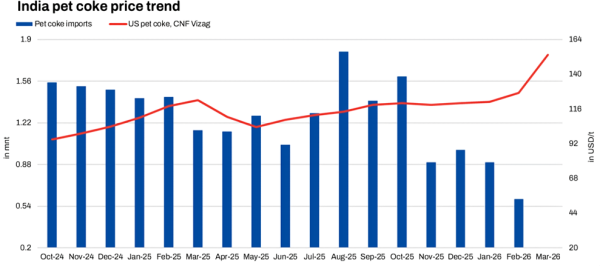
India petroleum coke price trend, data updated: 2026/3/20
Over the past two weeks, global petroleum coke market prices have risen sharply, with price increases observed across all major regions and product grades. The FOB price of 6.5% high-sulfur coke on the U.S. Gulf Coast has exceeded $100/ton, while CIF prices delivered to key consumption markets such as India and China have climbed into the $150/ton range.
The upward trend in the Indian market is particularly pronounced. The CIF price of petroleum coke with 6.5% sulfur content has risen to approximately $160–165/ton, with some spot cargo offers even higher. Domestic prices have also climbed in tandem, with refining companies raising prices multiple times in March, pushing domestic petroleum coke prices above INR 17,000/ton.
Despite the strong price trend, actual trading activity remains sluggish. Buyers are reluctant to accept cargoes at high price levels, leading to a widening bid-ask spread between buyers and sellers. In markets such as India and Turkey, consumers are either delaying purchases or switching to alternative fuels.
The current global petroleum coke price situation is as follows:
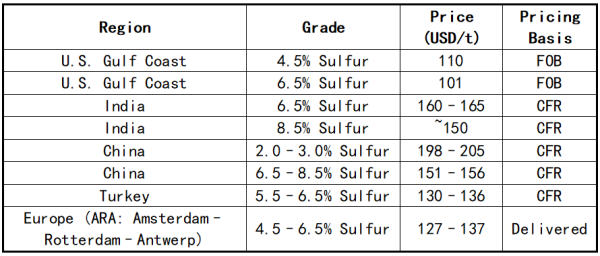
This pricing structure indicates that while the petroleum coke market appears firm on the surface, its liquidity and demand side are facing increasing challenges.
Supply disruptions, rising freight, and fuel substitution
The primary driver behind this price surge is supply disruption caused by the Middle East crisis. Petroleum coke supply from key refining hubs in Saudi Arabia has been affected, particularly facilities reliant on shipping routes through the Strait of Hormuz. Shipowners' wait-and-see attitudes, route diversions, and direct transport disruptions have reduced the flow of seaborne petroleum coke to Asian markets.
At the same time, freight costs have become a key influencing factor. Rising crude oil prices have pushed up bunker fuel costs, while war risk premiums and operational disruptions have further tightened shipping capacity. Freight rates from the U.S. Gulf Coast to India are hovering around $48–51/ton, significantly increasing CIF costs. Even with relatively moderate increases in FOB prices, CIF prices continue to be pushed higher.
Refineries are responding to market changes with a profit-maximization approach. U.S. refiners continue to raise FOB prices, while Indian refiners have also proactively increased domestic prices—both to reflect rising import parity and to regulate demand in a tight supply market. Under current conditions, refiners have little incentive to prioritize sales volume.
Downstream consumers, represented by the cement industry, are reacting very differently. Faced with continuously rising prices, many companies are stepping away from the market, slowing procurement activities, consuming inventories, and reassessing purchasing strategies. A key market shift is the increasing use of coal, particularly high-calorific North American Appalachian coal, which has become competitive with petroleum coke in terms of energy value.
This fuel substitution trend is especially evident in the Indian market, where cement producers are reducing petroleum coke usage and increasing procurement and consumption of both domestic and imported coal. In some cases, companies' petroleum coke procurement plans for the new fiscal year have either been postponed or completely replaced by coal purchases.
Traders, meanwhile, are seeking opportunities in a challenging market environment. Despite rising prices, market liquidity remains weak and price volatility persists. Traders are focusing on short-term trading opportunities, particularly those arising from coal substituting petroleum coke, rather than building long-term positions.
Firm prices but accumulating demand-side risks
The petroleum coke market is currently at a critical juncture. Supported by supply disruptions and rising freight rates, prices remain firm, but signs of demand pressure are beginning to emerge.
The core risk facing the market is fuel substitution. As the price of petroleum coke continues to rise relative to coal (especially on an energy-equivalent basis), consumers are increasingly willing to switch fuels. This trend is particularly pronounced in price-sensitive markets such as India, where companies have greater flexibility to substitute between coal and petroleum coke.
Meanwhile, market supply remains tight. Disruptions in the Middle East, combined with limited flexibility in supply adjustments from the U.S. and other exporting countries, mean that petroleum coke supply cannot increase rapidly. Freight constraints further exacerbate tight supply conditions, keeping CIF prices elevated.
In the short term, the petroleum coke market is likely to remain firm but volatile. Prices may continue to be supported by supply-side factors, but demand contraction and fuel substitution will act as key counterweights to further price increases.
Future market trends will depend on how long current supply disruptions persist. If freight rates remain high and Middle East supply continues to be constrained, petroleum coke prices may stay elevated; however, if coal continues to gain market share as a substitute fuel, the petroleum coke market may struggle to sustain current price levels.
In such a market environment, petroleum coke is no longer the default preferred fuel, and its pricing is increasingly linked to coal. The competition between the two is gradually shaping the direction of the petroleum coke market.
Feel free to contact us anytime for more information about the Anode Material market. Our team is dedicated to providing you with in-depth insights and customized assistance based on your needs. Whether you have questions about product specifications, market trends, or pricing, we are here to help.
No related results found




0 Replies