




【2026 Graphite Industry】Reshaping Value Amid the New Energy Wave

The rapid growth of the EV and energy storage industries is boosting demand for high-performance lithium batteries, driving the market for quality petroleum coke and synthetic graphite. The quality and particle size of calcined petroleum coke directly affect synthetic graphite performance, especially in anode production.
【2026 Graphite Industry】Reshaping Value Amid the New Energy Wave
As new energy vehicles reshape the global transportation landscape with unstoppable momentum, as the semiconductor industry seeks breakthroughs amid "chokepoint" constraints, and as nuclear energy and photovoltaics become the twin pillars of energy transition—an ordinary-looking black mineral is playing an increasingly critical role in strategic emerging industries. It is neither rare earths nor lithium, cobalt, or nickel, but graphite, known as "industrial black gold."
China possesses the world's most abundant graphite resources, ranking first globally in reserves, output, and exports. However, the dilemma of being "large but not strong" has long troubled the industry: a high proportion of raw ore exports, insufficient deep processing, reliance on imports for high-end products, and increasing environmental pressure. During the 14th Five-Year Plan period, with the outbreak of the new energy revolution and surging demand for high-end graphite materials from strategic emerging industries, China's graphite industry has been undergoing a critical transition from "resource extraction" to "materials manufacturing."
Recently, the China Research and Development Academy (Zhiyan Puhua) completed the "Research on the Development Situation of the Graphite Industry During the 14th Five-Year Plan and Forecast of Enterprise Investment Trends During the 15th Five-Year Plan Period." This report does not shy away from the industry's structural contradictions but attempts to answer a core proposition: during the 15th Five-Year Plan period (2026–2030), how can China's graphite industry shift from "selling ore" to "selling materials"? How can it transition from "scale expansion" to "value creation"?
I. Review of the 14th Five-Year Plan: Reshaping Value Amid the New Energy Wave
1.1 The "Green Revolution" in Resource Development
During the 14th Five-Year Plan, the most significant transformation in graphite resource development was the comprehensive implementation of the "green mine" concept. Market research by Zhiyan Puhua shows that the policy environment underwent fundamental changes during this period: from purely pursuing output growth to coordinating resource development with ecological protection; from extensive mining to refined and intensive development.
Heilongjiang Province, the largest graphite-producing region in China, provides a representative example. The province explicitly proposed the strategic goal of "building green mines," exploring a working system of "joint creation by governments at all levels, enterprise-led construction, third-party evaluation, and social supervision" for green graphite mines. Newly granted mining rights contracts are aligned with green mine construction standards, specifying requirements for development methods, resource utilization, environmental protection and restoration, and land reclamation, ensuring that all new mines meet green mine standards. Small-scale mines that fail to meet green standards are being eliminated, and existing graphite mines are undergoing green transformation.
This "green revolution" is not merely environmental compliance but a systemic transformation of development models. Zhiyan Puhua's feasibility research report indicates that green mine construction involves multiple dimensions, including optimization of mining processes, comprehensive tailings utilization, ecological restoration technologies, and digital supervision. For example, the adoption of backfill mining and dry tailings discharge technologies can significantly reduce water consumption and tailings dam safety risks; intelligent mine construction can enable precise resource extraction and full-process environmental monitoring.
Even more noteworthy is the enhancement of resource security capacity. During the 14th Five-Year Plan, various regions increased graphite resource exploration to unlock mineral potential. Heilongjiang proposed achieving a certain annual production capacity of graphite concentrate by 2025 and implementing integrated exploration-mining-processing bidding, allocating large and super-large graphite resources to strategic investors with deep-processing capabilities. This allocation method of "concentrating resources in advantageous enterprises" helps address the problem of fragmentation at the source and lays the foundation for high-quality industry development.
1.2 The "Explosive Growth" of Anode Materials
If changes on the resource side were "incremental," then changes on the application side were "explosive." During the 14th Five-Year Plan, the boom in the new energy vehicle industry drove a surge in demand for lithium-ion battery anode materials. Graphite—particularly spherical graphite and artificial graphite anodes—became the biggest beneficiary.
Zhiyan Puhua's industry research report reveals profound changes in demand structure: natural flake graphite processed through spheroidization, purification, and coating is used to produce spherical graphite anodes, which have become the mainstream choice for power batteries due to superior electrochemical performance; artificial graphite anodes, with advantages in cycle performance, occupy an important position in high-end power and energy storage batteries. Companies such as BTR, Shanshan Co., and Putailai have become major global suppliers of anode materials through technological innovation and capacity expansion.
The evolution of technical routes is also noteworthy. Early anode materials primarily used directly crushed natural graphite, which suffered from low initial efficiency and poor cycle performance. During the 14th Five-Year Plan, the industry gradually shifted to a "spheroidization + surface modification" technical route: mechanical processing of flake graphite into spherical form to increase tap density and specific capacity; surface coating and chemical modification to improve compatibility with electrolytes and enhance cycle stability. The emergence of micro-expansion layer technology was another breakthrough—by slightly increasing interlayer spacing, lithium-ion diffusion rates improved while mitigating volume changes during charge-discharge cycles, bringing natural graphite anode performance close to its theoretical limit.
However, hidden concerns accompany prosperity. Zhiyan Puhua's research analysis points out early signs of overcapacity in the anode material industry, intensifying homogenized competition in low-end products, and escalating price wars. Meanwhile, rapid development of silicon-based anodes and lithium titanate poses substitution threats. This internal and external pressure requires enterprises to shift toward high-end and differentiated development during the 15th Five-Year Plan.
1.3 The "Ice-Breaking Journey" of High-End Applications
Compared with the mass-market anode sector, high-end graphite materials achieved important breakthroughs during the 14th Five-Year Plan. Zhiyan Puhua categorizes these into three directions: "high, precise, and cutting-edge."
High-temperature metallurgy and photovoltaics. High-purity graphite, with its high-temperature resistance, excellent conductivity, and chemical stability, is a key material in monocrystalline silicon growth furnaces and polysilicon casting furnaces. In semiconductor-grade single-crystal silicon furnaces, ash content in high-purity graphite electrodes must be below 5 ppm to meet stringent gas contamination requirements. As photovoltaics move toward larger wafer sizes and higher efficiency, demand for high-purity graphite thermal field materials continues to grow.
Nuclear industry. Nuclear graphite is a key material in advanced reactors such as high-temperature gas-cooled reactors and fast reactors, requiring ultra-high purity, high density, and isotropy. China long relied on imports, but during the 14th Five-Year Plan achieved gradual localization through technological breakthroughs. Though limited in scale, its strategic value is extremely high.
Semiconductors and electronic information. Isostatic graphite is used in silicon wafer processing, compound semiconductor growth, and packaging molds; in EDM applications, graphite electrodes are gradually replacing copper electrodes due to easier machining, lower wear, and lower cost. With accelerating semiconductor localization, there is vast substitution space for high-end isostatic graphite.
Zhiyan Puhua's project evaluation shows that these high-end fields share common traits: high technical barriers, long certification cycles, strong customer stickiness, and high added value. Although current market size is smaller than anodes, growth potential and competitive landscape make them strategic priorities for the 15th Five-Year Plan.
II. Strategic Shift During the 15th Five-Year Plan: From "Resource Dependence" to "Technology-Driven"
2.1 High-End and Diversification of Anode Materials
During the 15th Five-Year Plan, graphite anode materials will undergo deep adjustment. Zhiyan Puhua forecasts two major trends: high-end development and diversification.
High-end development involves continuous performance enhancement and cost optimization. As power batteries demand higher energy density, fast-charging capability, and longer cycle life, anodes must move toward "high capacity, high compaction, and high rate performance." Silicon-carbon composites, advanced coating materials, and pre-lithiation technologies may push specific capacity beyond 370 mAh/g, approaching the theoretical limit of 372 mAh/g. Process optimization and scale production will further reduce costs.
Diversification involves expanding application scenarios: energy storage batteries, consumer electronics, and power tools. Differentiated performance requirements will drive diversified product systems.
Zhiyan Puhua recommends focusing investment on enterprises with raw material advantages and innovation capabilities, strong customer integration, and next-generation technology distrubution including silicon-based and solid-state battery anodes.
2.2 Import Substitution and Application Expansion of Specialty Graphite
Specialty graphite (isostatic, molded, extruded, etc.) represents the most strategic direction during the 15th Five-Year Plan. Demand grew rapidly from 2019–2024 with a CAGR exceeding 15%, yet high-end products remain import-dependent.
Semiconductors are the largest incremental market. With fab expansion and third-generation semiconductors (SiC, GaN), demand for high-purity graphite thermal fields and components will grow. Currently dominated by SGL (Germany) and Toyo Tanso (Japan), domestic firms are gradually breaking through.
Photovoltaics and nuclear graphite also represent strong growth areas, with nuclear graphite being the "crown jewel" of specialty graphite.
Investment strategy should emphasize application-driven innovation and industry-academia collaboration.
2.3 Purity Competition and Application Innovation in High-Purity Graphite
High-purity graphite (>99.9% carbon) will see breakthroughs in purity and cross-sector innovation. Each step from 99.9% to 99.999% requires major technological advances. Future focus includes combined physical-chemical purification and plasma technologies.
Applications are expanding into hydrogen fuel cell bipolar plates, aerospace thermal protection systems, and biomedical implants—small in scale today but high in growth and value.
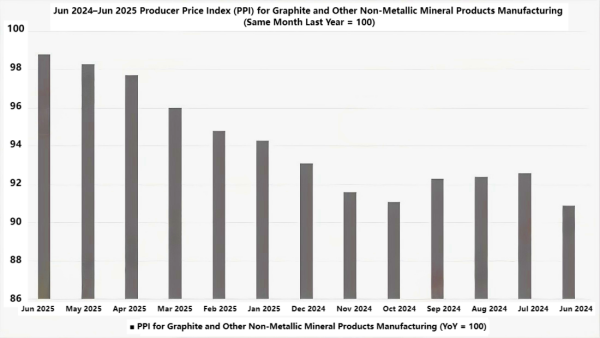
III. Industry Chain Restructuring: From "Single-Point Breakthrough" to "Ecosystem Synergy"
3.1 Upstream Intensification and Internationalization
Resource development will trend toward consolidation and overseas expansion, aligned with green intelligent mining and Belt and Road resource distrubution.
3.2 Midstream Specialization and Platformization
Manufacturing will combine specialized niche champions with integrated platform enterprises. Core competitiveness lies in accumulated process know-how.
3.3 Downstream Customization and Collaboration
Applications shift toward customized solutions and deep integration with downstream innovators in EVs, semiconductors, and photovoltaics.
IV. Conclusion: Writing China's Chapter in the Era of "Black Gold" Materials
Returning to the opening question: how can China's graphite industry shift from "selling ore" to "selling materials" during the 15th Five-Year Plan? Zhiyan Puhua's answer: through deep technological innovation, systematic industry integration, and comprehensive green transformation—converting resource advantages into technological, quality, and brand advantages.
During the 14th Five-Year Plan, China's graphite industry achieved breakthroughs from "0 to 1" and initial industrialization from "1 to 10." During the 15th Five-Year Plan, it will face the challenge of scaling from "10 to 100"—a multidimensional systemic project involving technology, market, capital, and policy.
Feel free to contact us anytime for more information about the Anode Material market. Our team is dedicated to providing you with in-depth insights and customized assistance based on your needs. Whether you have questions about product specifications, market trends, or pricing, we are here to help.
No related results found




0 Replies