



【Lithium Battery Anode】2026 Supply–Demand Review: Full Analysis of Graphitization...

The rapid growth of the EV and energy storage industries is boosting demand for high-performance lithium batteries, driving the market for quality petroleum coke and synthetic graphite. The quality and particle size of calcined petroleum coke directly affect synthetic graphite performance, especially in anode production.
【Lithium Battery Anode】2026 Supply–Demand Review: Full Analysis of Graphitization, Prices, and Energy Storage Demand
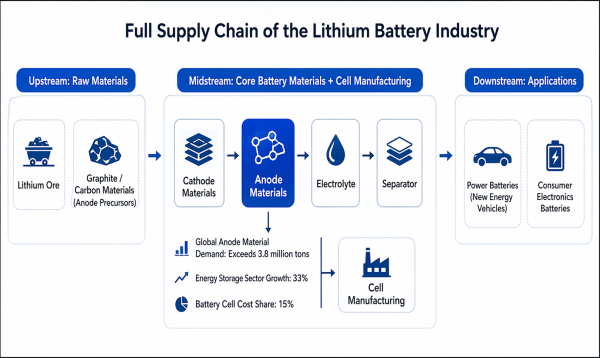
In 2026, the lithium battery anode materials market underwent a critical shift from "volume and price decline" to "volume growth with stable prices." As the global power battery market enters the 3TWh era, coupled with the energy storage market becoming the second-largest demand engine with a 33% annual growth rate, anode materials are emerging from the painful capacity digestion phase of the past two years and entering a new cycle of prosperity. This article comprehensively reviews the changes and opportunities in the 2026 anode market from six dimensions: supply-demand structure, graphitization costs, price trends, energy storage demand, technological iteration, and leading company dynamics.
I. Supply–Demand Review: From "Severe Oversupply" to "Tight Balance"
After the intense price competition and capacity clearance from 2023 to 2025, the supply-demand relationship of anode materials saw substantial improvement in 2026. According to industry forecasts, global anode demand is expected to exceed 3.8 million tons in 2026. In China, total annual anode production is projected at approximately 3.26 million tons, with about 15,000 tons of imports, bringing total supply to around 3.275 million tons. Downstream consumption from power batteries, energy storage, and consumer electronics is expected to reach approximately 3.23 million tons, resulting in a supply surplus of about 45,000 tons—indicating a relatively loose but manageable market balance.
From a monthly perspective, the year shows a pattern of "loose first, tight later." In Q1, affected by the purchase tax reduction policy and the traditional Lunar New Year off-season, anode output remained at a relatively low level. Demand gradually recovered in Q2 and Q3, with Q3 being the traditional peak season. Driven by both power battery and energy storage demand, production increased significantly. Q4 saw a slight pullback. In terms of supply-demand balance, a temporary supply shortage occurred during the peak season from September to November, while inventory accumulation dominated in other months.
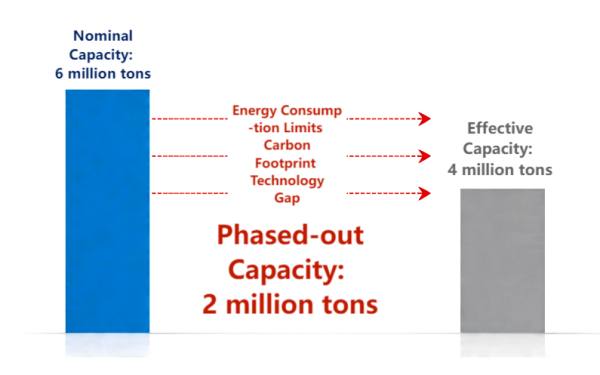
The core logic behind supply-demand improvement lies in the fact that although nominal capacity appears large, effective capacity is far below headline figures. The current industry-wide capacity utilization rate is only about 50%–60%. A large number of outdated production lines have been naturally phased out due to excessive energy consumption and technological backwardness. New regulations in 2024 require graphitization energy consumption to be below 3,000 kgce/t; non-compliant lines face electricity costs 30%–50% higher than leading producers, making operations unprofitable in a low-margin environment. In addition, leading battery manufacturers such as CATL and LG Energy Solution have implemented stringent green supply chain audits since 2025. Older production lines lacking green electricity traceability and efficient equipment are excluded due to non-compliant carbon footprints. Overall, only about 3.8–4.2 million tons of effective capacity can meet top-tier standards, and this tight balance provides strong support for price recovery.
II. Graphitization: The Core Variable in Anode Costs
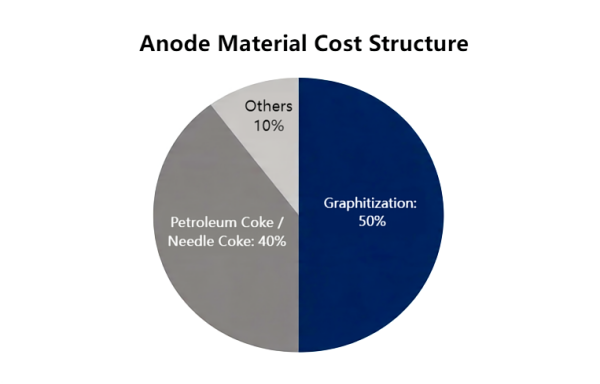
Graphitization is the largest cost component in anode materials, accounting for approximately 50% of total costs. In 2026, the primary cost-reduction strategy is integrated production. Leading companies are building in-house graphitization capacity to convert outsourced processing costs into internal costs.
Shangtai Technology is at the forefront of this trend. Its Xiyang base adopts a closed-loop process of "coking as the source—graphitization as the core—anode as the end." Needle coke produced as a by-product of coking is directly transported via pipelines to the graphitization stage, reducing cost per ton by 8%. With a self-built 110 kV substation and green electricity trading, power costs are controlled below RMB 0.38/kWh, about RMB 0.12/kWh lower than outsourced graphitization. The company estimates that once full capacity is reached in 2026, the total cost of artificial graphite at the Xiyang base could fall below RMB 22,000/ton, setting a new industry low.
Baichuan Co., Ltd. has also made significant progress in graphitization. Its integrated project of 100,000 tons of anode material (including 100,000 tons of graphitization capacity) was fully commissioned in 2025, with capacity expected to surge in 2026. As one of the few domestic companies achieving full integration from needle coke to anode materials (including graphitization), Baichuan has a clear advantage in mitigating raw material price volatility.
It is worth noting that the regional concentration of graphitization capacity is also increasing. The Lanzhou New Area New Materials Industrial Park has formed an industrial cluster led by three major companies—Baohang, Hongbin, and Graphene—collaborating synergistically. The planned annual capacity reaches 450,000 tons, with about 220,000 tons already built, accelerating the formation of a "million-ton anode material valley."
III. Price Analysis: Cost-Driven, Moderate Uptrend
In 2026, anode material prices show a "cost-driven increase" rather than a surge driven by overheated demand. On the raw material side, rising petroleum coke prices exert strong cost pressure. Petroleum coke accounts for about 40% of artificial graphite anode costs. In March 2026, low-sulfur petroleum coke prices rose by 8%, while high-sulfur coke surged by as much as 39%. For every RMB 1,000/ton increase in coke price, anode raw material costs rise by RMB 1,200–1,500/ton. Including graphitization costs, total costs increase by RMB 3,000–5,000/ton.
Under cost pressure, anode producers have a strong willingness to raise prices. In Q1 2026, mid-range artificial graphite prices rose to RMB 28,000/ton, while high-end products exceeded RMB 30,000/ton, up RMB 2,000–3,000/ton quarter-on-quarter. Data from February 2026 shows mainstream mid-range prices at RMB 23,000–32,000/ton and high-end products at RMB 42,000–65,000/ton. By early March, mid-range products further increased to RMB 26,000/ton (corrected), while high-end products reached above RMB 33,000/ton.
However, there is a clear lag in cost pass-through. Most anode producers adopt a "produce based on sales" strategy, and due to production cycles, earlier cost increases have not yet been fully transmitted to end markets, keeping prices relatively stable. Looking ahead, with continued recovery in downstream demand and sustained high cost support, artificial graphite anode prices are expected to maintain a steady upward trend and open further upside potential.
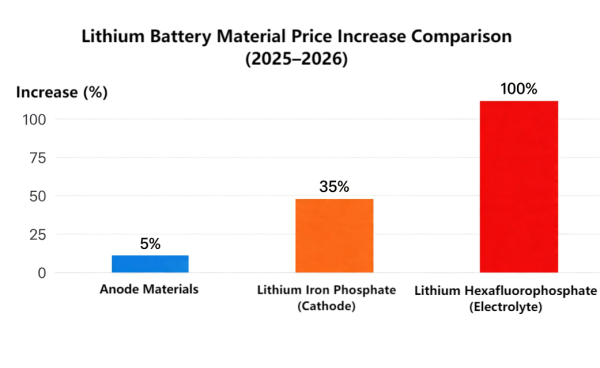
It should be emphasized that the price increase of anodes is far lower than that of lithium iron phosphate and lithium hexafluorophosphate. By the end of 2025, lithium iron phosphate prices had risen by over 30% compared to September, while lithium hexafluorophosphate surged nearly 200% within two months. This disparity reflects significant differences in supply-demand structures across material segments. The anode sector still has relatively abundant capacity, and the loose supply-demand balance limits price increases.
IV. Energy Storage Demand: The Second Growth Engine Takes Shape
If 2025 marked the initial surge of energy storage demand, then 2026 is the year it firmly establishes itself as the "second growth engine." According to industry forecasts, energy storage battery demand for anodes will grow by 33% in 2026, surpassing the 27% growth rate of power batteries and becoming the fastest-growing downstream application. The incremental demand from energy storage is expected to reach approximately 170,000 tons, making it the second-largest source of growth.
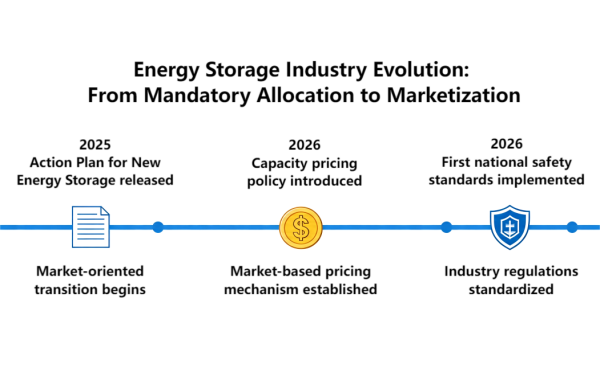
This growth is strongly driven by policy support. In 2025, the "Special Action Plan for Large-Scale Development of New Energy Storage (2025–2027)" was officially released, setting a target of 180 GW installed capacity by 2027 and driving approximately RMB 250 billion in investment. The industry has entered a phase of policy-driven growth. In early 2026, a nationwide energy storage capacity pricing mechanism was introduced for the first time, implementing a list-based management system and fundamentally reshaping the profitability model of independent energy storage. At the same time, the first mandatory national safety standard for lithium battery energy storage was implemented, establishing a full-chain safety supervision and standard system, accelerating the elimination of low-quality capacity and promoting high-quality industry development.
In terms of installation scale, approximately 183 GWh of new energy storage capacity was connected to the grid in 2025. Soochow Securities forecasts a further 50% increase to 275 GWh in 2026. From a corporate perspective, the share of energy storage orders in anode companies is rising rapidly. For example, Zhongke Electric achieved a capacity utilization rate of 106.72% in 2025, far above the industry average, driven by both energy storage and fast-charging vehicle demand.
V. Technological Iteration: Silicon-Based Anodes Break Through from 0 to 1
2026 marks a critical turning point in anode material technology, with silicon-based anodes transitioning from the laboratory to industrialization.
In terms of market size, global demand for silicon-based anodes is expected to reach 60,000–70,000 tons in 2026, corresponding to a market value of RMB 18–21 billion. Although penetration remains below 1% of total anode shipments, the growth rate is remarkable—more than doubling compared to 2023.
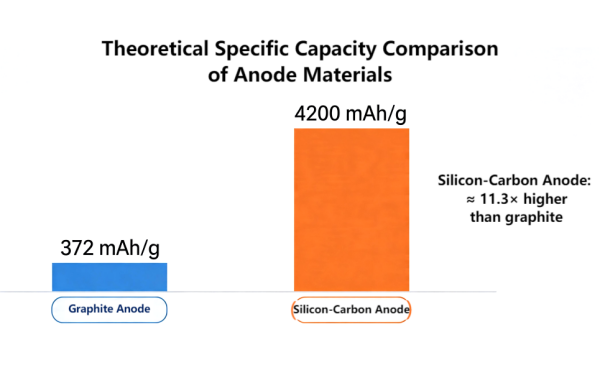
In terms of technology routes, CVD-based silicon-carbon anodes are considered the most promising for industrialization. This approach has made significant breakthroughs in mitigating volume expansion, greatly improving stability, and offering better cost potential than silicon-oxygen anodes. At present, global battery manufacturers are intensively innovating around silicon-based anodes. Leading companies such as CATL, Tesla, and Qingtao Energy have already introduced silicon-containing anode battery products to the market.
On the application side, silicon-carbon anodes are rapidly penetrating consumer electronics. Samsung Electronics has announced plans to launch smartphones equipped with silicon-carbon anode batteries. Among domestic companies, Zhongke Electric has completed pilot production lines for silicon-carbon anodes, with products passing customer evaluations and preparing for mass production. Xiangfenghua's first-generation silicon-carbon anode achieves a specific capacity of 1,800 mAh/g, while its second-generation reaches 2,100 mAh/g. Binhai Energy's products have entered customer testing and introduction stages.
It is worth noting that the scaling of silicon-based anodes will also drive demand for key auxiliary materials, including silane gas, anode coating materials, PAA binders, conductive agents such as carbon black/carbon nanotubes, and electrolyte additives like FEC. The entire supply chain is expected to benefit.
VI. Leading Company Dynamics: Integration and Globalization in Parallel
In 2026, the competitive landscape of the anode materials industry is accelerating toward consolidation among leading players. Integrated cost reduction + global expansion have become the two core strategies.
Shangtai Technology exemplifies this trend. The company is accelerating the development of new capacity projects in Malaysia and Shanxi, both expected to be commissioned simultaneously in Q3 2026. By year-end, its integrated artificial graphite anode capacity is expected to exceed 500,000 tons annually. The Shanxi Phase IV project involves a total investment of approximately RMB 4 billion, adding 200,000 tons of annual capacity. The Malaysia project leverages the ASEAN–EU zero-tariff channel and has signed long-term pricing agreements with clients such as POSCO (South Korea) and BASF (Germany), mitigating carbon tariff risks in Europe and the U.S.
Baichuan Co., Ltd.'s 100,000-ton integrated anode project in Ningdong, Ningxia was fully commissioned in 2025, with capacity entering a release phase in 2026, positioning the company to enter the industry's top tier.
Zhongke Electric, driven by both energy storage and fast-charging demand, achieved a capacity utilization rate of 106.72% in 2025, significantly exceeding the industry average. Shanshan Co., Ltd.'s Phase I of a 300,000-ton integrated anode project has been commissioned, while Phase II in Baotou, Inner Mongolia is nearly complete. In Lanzhou New Area, Baohang, Hongbin, and Graphene have jointly built an anode material cluster with a planned annual capacity of 450,000 tons.
From a profitability perspective, leading manufacturers continue to benefit from strong customer structures, full-capacity operations, and significant cost advantages from new production lines. The industry's net profit per ton bottomed out at RMB 1,000–1,500/ton in 2025 and is expected to recover to RMB 2,000–3,000/ton in 2026.
VII. Summary and Outlook
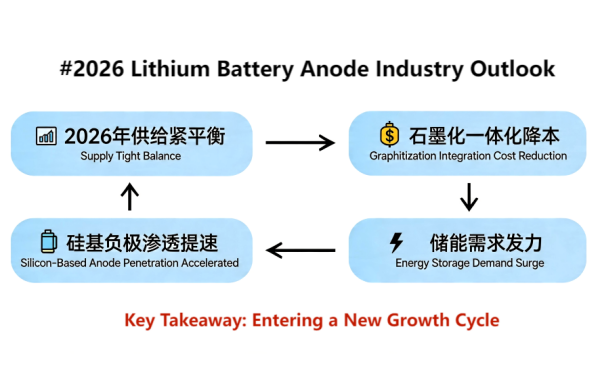
Reviewing the 2026 anode materials market, several key conclusions can be drawn:
First, the supply-demand structure has improved significantly. The industry has shifted from "severe oversupply" to a "tight balance," with insufficient effective capacity as the key variable. Energy consumption limits, carbon footprint requirements, and fast-charging technology gaps have eliminated approximately 2 million tons of inefficient capacity, providing strong support for market stabilization.
Second, graphitization integration is the core of cost reduction. Building in-house graphitization capacity significantly reduces production costs, with leading companies approaching total costs of RMB 22,000/ton. This trend will continue to strengthen, further squeezing the survival space of second- and third-tier producers lacking integration capabilities.
Third, prices are rising moderately, driven mainly by costs. Rising raw material prices such as petroleum coke are the main driver, but overall capacity remains ample, limiting sharp price increases. Price adjustments by anode companies lag behind cost changes, with stronger price transmission expected in the second half of the year.
Fourth, energy storage has become the strongest growth engine. With a 33% annual growth rate leading downstream sectors, policy benefits (capacity pricing and safety standards) continue to be released, and the share of energy storage orders in anode companies will increase rapidly.
Fifth, silicon-based anodes are entering their first year of industrialization. Although current penetration is below 1%, growth is rapid. CVD silicon-carbon anodes are gradually overcoming technical bottlenecks and are expected to become the main direction for the next generation of material upgrades.
Looking ahead to 2027, as overseas capacity is gradually released and integrated cost reduction continues, the profitability center of the anode materials industry is expected to rise further. A stable industry structure, product upgrades, and positive export demand will drive continued profit differentiation among companies, with leading players achieving more stable growth and the industry entering a new phase of stable volume, declining costs, and price recovery.
Feel free to contact us anytime for more information about the Anode Material market. Our team is dedicated to providing you with in-depth insights and customized assistance based on your needs. Whether you have questions about product specifications, market trends, or pricing, we are here to help.
No related results found




0 Replies