




【The Next Five Years】Ten Major Trends Shaping the Future of China's Steel Industry

Graphite electrodes are the "lifeline" of EAF steelmaking! As the core material for arc conduction and heating, they feature high conductivity and heat resistance, directly affecting molten steel quality and output. Mastering graphite electrodes means mastering the initiative in EAF steelmaking!
【Technology Frontier】The Next Five Years: Ten Major Trends Shaping the Future of China's Steel Industry
With the successful conclusion of the 14th Five-Year Plan, China's steel industry has completed its phased transition from incremental expansion to volume-reduction–driven transformation and has officially entered the critical first five years of the 15th Five-Year Plan. According to data from the China Iron and Steel Association, during the 14th Five-Year Plan period, China's crude steel output fell from 1.065 billion tons to 1.005 billion tons, a reduction of 60 million tons; apparent crude steel consumption declined even more sharply, from 1.048 billion tons to 893 million tons, a decrease of 155 million tons. As 2025 serves as the linking year between the close of the 14th Five-Year Plan and the planning of the 15th Five-Year Plan, the adjustment trend has further intensified: from January to November, crude steel output fell 4% year on year to 890 million tons, while apparent consumption declined 6.5% to 770 million tons.
Standing at this critical historical juncture, the steel industry will exhibit ten core development trends over the next five years, profoundly reshaping the industry's future landscape.
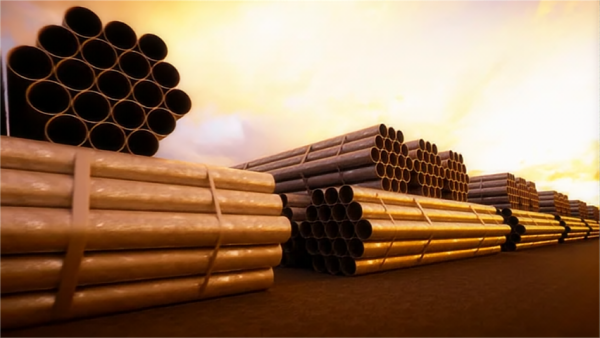
01. Further Cuts in Crude Steel Output and a Higher Share of High-End Steel Products
Output control has become the industry norm, but the focus is shifting from simply "controlling total volume" to "optimizing structure." The exit of outdated capacity during the 14th Five-Year Plan period has made room for the development of high-end steel products. With the growth of new energy vehicles and high-end equipment manufacturing, demand for high-end steel continues to rise, prompting enterprises to step up R&D investment.
Since the start of the 14th Five-Year Plan, China's steel product structure has been rapidly adjusted. From a broad perspective, the share of manufacturing-use steel increased from 42% in 2020 to 50% in 2024. Entering 2025, industrial-use steel output grew rapidly year on year, with manufacturing-use steel exceeding 50% of total consumption. The share of construction steel fell from 58% in 2020 to 50% in 2024 and is expected to continue declining in 2025.
R&D and production of new and especially high-end products have accelerated. Silicon steel, a representative high-end product, reached output of about 18 million tons in 2024, up 48% from 2020. Within this, the share of grain-oriented silicon steel rose from 14% to 18%; high-magnetic-induction grain-oriented silicon steel increased its share from 59% to 68% of total grain-oriented output; and high-grade non-oriented silicon steel rose from 21% to 31% of non-oriented output.
Over the next five years, under the high-quality development orientation of the 15th Five-Year Plan, output control and product upgrading will reinforce each other, pushing the industry from "competing on scale" to "competing on technology." Steel enterprises will continue to focus on R&D of high-end steel, targeting the needs of new energy, high-end equipment, and other key sectors. As product structures continue to optimize, the steel industry will shift from scale-driven growth to quality-and-efficiency–driven development, providing stronger material support for manufacturing upgrading and green development.
02. Central and State-Owned Enterprise Restructuring Drives a New Wave of Consolidation, Raising Industry Concentration
According to the China Iron and Steel Association, by the end of 2024, the industry's CR10 and CR4 reached 43% and 26.9% respectively, up 4.4 and 4.6 percentage points from the end of the 13th Five-Year Plan. In 2025, 16 steel companies entered the Fortune Global 500, of which 12 were Chinese, five more than at the end of the 13th Five-Year Plan. Through mergers and reorganizations, industry concentration and development quality have been significantly improved.
The 2022 Guiding Opinions on Promoting High-Quality Development of the Steel Industry encouraged leading enterprises to implement mergers and acquisitions to build several world-class mega steel groups, and to cultivate one to two specialized leaders in stainless steel, special steel, seamless pipes, and ductile iron pipes. Guided by this policy, and under the concept of optimizing stock and reducing incremental growth, the industry accelerated restructuring during the 14th Five-Year Plan, forming a "Baowu in the south, Ansteel in the north" pattern.
SOE restructuring continues.
At the Central Enterprise Leaders Conference held on December 22–23, 2025, M&A was placed at the core of optimizing the state-owned economy. SASAC Chairman Zhang Yuzhuo emphasized that SOEs should advance strategic, professionalized restructuring and high-quality M&A to move toward high–value-added and high-tech industries.
Capacity replacement to be abolished.
The draft Steel Industry Capacity Replacement Measures issued on October 24, 2025, states that from 2027, ironmaking and steelmaking capacity replacement between different enterprises will no longer be allowed, but can be achieved through substantive mergers and reorganizations. This provides policy support for capacity integration and cross-regional transfers.
Overall, driven by policy and SOE restructuring, industry consolidation will continue to deepen, with concentration steadily rising.
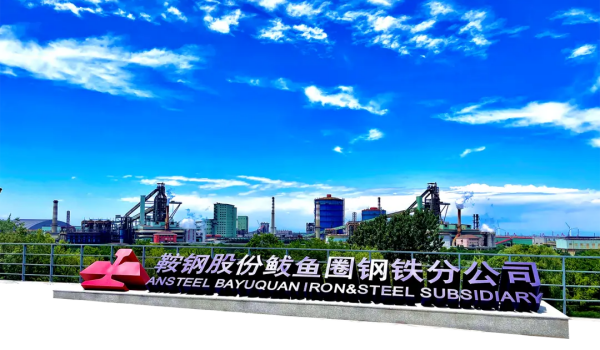
03. During the "15th Five-Year Plan" period, the concentration of the steel industry toward coastal regions will become a clearly defined strategic layout
During the 15th Five-Year Plan period, the concentration of the steel industry toward coastal regions will become a clearly defined strategic layout, advancing around three core directions.
First, the share of coastal capacity will continue to rise. Shandong has explicitly stated that by the end of the 15th Five-Year Plan, the proportion of coastal crude steel capacity will increase from 53% to more than 65%, while Liaoning is accelerating the development of port-adjacent projects such as the second phase of Ansteel's Bayuquan base.
Second, large-scale premium steel bases will be built. Laoting County in Hebei is advancing the "twin-city strategy of invigorating steel through ports and invigorating ports through steel," striving to reach an economic output of RMB 150 billion by the end of the 15th Five-Year Plan and to establish a demonstration zone for high-end, intelligent, and green development of the steel industry. Shandong will make every effort to build two major premium steel bases in the Rizhao–Linyi and Laiwu–Tai'an corridors, develop supporting projects such as Yongfeng's integrated steel–coke complex, raise the number of ten-million-ton-level steel enterprises to three (Shandong Steel, Rizhao Steel, and Yongfeng), and push the share of high-end premium steel above 50%.
Third, transformation will be achieved by leveraging coastal advantages: using ports to reduce raw material and fuel transportation costs, using environmental capacity advantages to promote ultra-low-emission retrofits, and staying close to demand from eastern China's manufacturing industries, thereby easing the supply–demand mismatch caused by "shipping northern steel to the south."
In the future, coastal steel clusters will be further upgraded into an integrated ecosystem of "port + industry + technology + services." With deep-water berths and multimodal transportation networks, logistics costs will continue to be compressed and supply-chain resilience enhanced. At the same time, coastal bases will become the core carriers for the implementation of low-carbon technologies, concentrating on the promotion of hydrogen metallurgy and short-process steelmaking while simultaneously establishing digital yards and full-process intelligent control systems to achieve dual improvements in efficiency and environmental performance.
Relying on port-adjacent location advantages, these bases will also deeply connect with the high-end manufacturing needs of automobiles, shipbuilding, and new energy industries, cultivating more clusters of high value-added products and driving a transition from "coastal manufacturing" to "coastal intelligent manufacturing," ultimately forming a group of globally competitive port-based steel industrial hubs and injecting lasting momentum into the industry's high-quality development.
04. Deepening intelligent manufacturing and the continuous emergence of unmanned steel plants
The Fourth Plenary Session of the 20th CPC Central Committee proposed adhering to intelligent, green, and integrated development directions to promote quality upgrading of key industries. In recent years, advanced technologies such as virtual simulation, artificial intelligence, and big-data analytics have deeply penetrated core steelmaking processes, riding the momentum to drive digital technologies to extend across the entire production chain, achieving full-process optimization and restructuring of steel production and promoting the upgrading of the steel industry.
Digitalization and intelligence have become the core tools for steel enterprises to reduce costs and improve efficiency. Full-process intelligent transformation now covers all stages from ironmaking to rolling. As of the end of September 2025, China's steel industry had built 36 "excellent-level" smart factories, exceeding the target of more than 30 smart factories set in the 14th Five-Year Plan. Among the global "lighthouse factories," which represent the world's highest level of intelligent manufacturing and digitalization, there are seven steel enterprises worldwide, three of which are in China. These achievements represent only a snapshot of the impressive progress made in intelligent manufacturing during the 14th Five-Year Plan period.
At present, intelligent manufacturing has become a strategic high ground in competition among major economies. In recent years, the state has issued a series of policy documents, from data infrastructure to "AI+," to systematically promote the integration of artificial intelligence with industrial sectors. As a major industrial scenario, the steel industry is actively advancing the AI+ initiative.
With support from policy, standards, technological breakthroughs, and model innovation, "AI + steel" already has a solid foundation for advancement. Going forward, the steel industry will follow an implementation path of "overall planning, phased execution, and iterative optimization," starting from pain-point and high-return scenarios, gradually expanding application scope through rapid implementation and verification and standardized promotion, with the goal of substantially improving total factor productivity and enhancing global competitiveness of products, thereby creating new-quality productive forces for China's steel industry in the AI era.
Over the next five years, with the deep application of 5G, AI, and big-data technologies, intelligent manufacturing will shift from isolated breakthroughs to full-chain collaboration, driving a fundamental transformation of production models from "experience-driven" to "data-driven," in line with the digital transformation requirements of the 15th Five-Year Plan.
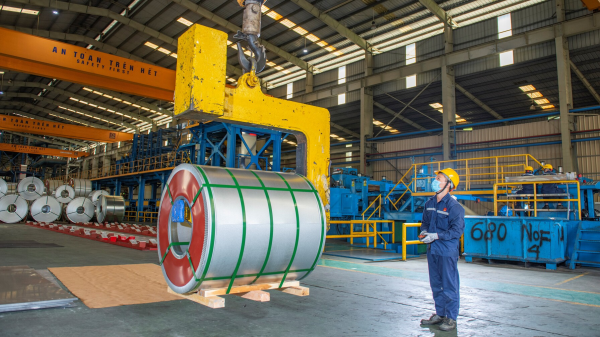
05. Accelerating low-carbon transformation and the large-scale deployment of hydrogen metallurgy
China's steel industry accounts for about 15% of the nation's total carbon emissions, ranking first among manufacturing industries. Therefore, hydrogen-based metallurgy, which replaces carbon with hydrogen, has become a critical technological pathway for the industry to achieve carbon peaking and carbon neutrality. Under the dual-carbon goals, high-emission industries such as steel and chemicals face unprecedented pressure to reduce emissions. When energy-efficiency improvements approach physical limits and scrap steel recycling is constrained by resource availability, attention turns to the lightest element on the periodic table—hydrogen. In particular, "green hydrogen" produced by electrolyzing water using renewable energy is regarded as the "ultimate key" to industrial decarbonization.
From coastal regions to inland areas, hydrogen-based steelmaking projects are being rolled out across the country at a striking pace. In December 2025 alone, two major developments occurred: Baosteel Zhanjiang achieved project completion, while a 1.25-million-ton-per-year green-power, green-hydrogen, green-steel integrated project in Guyang County, Baotou, Inner Mongolia, was officially signed, with a total investment of RMB 4.8 billion. These projects share a common feature: a full-chain integrated design covering "wind and solar power generation – green hydrogen production – steelmaking." In Xinjiang, Hengtai Green Energy's 1.2-million-ton green-energy hydrogen-based DRI project is scheduled to start in April 2026; in Songyuan, Jilin, the green-power–green-hydrogen–pure-hydrogen metallurgy engineering project has added ammonia production facilities.
The rapid development of China's hydrogen metallurgy industry provides a replicable "Chinese solution" for global steel decarbonization. A complete industrial chain is taking shape, from upstream wind and solar power generation to midstream green hydrogen production and downstream hydrogen-based steelmaking. According to industry forecasts, around 2030, China's hydrogen direct reduction technology will gradually enter the commercialization stage, and by around 2040, it will reach about 13% market penetration.
As technology matures and costs continue to fall, hydrogen metallurgy will not only enable low-carbon transformation in steel production but will also give rise to a trillion-yuan-level green hydrogen market and high-end equipment clusters, driving systemic changes across upstream energy, midstream equipment, downstream applications, and supporting policies.
In the future, with fuller utilization of green power resources and improved standards systems, hydrogen metallurgy will drive deep decarbonization of the steel industry at the source while empowering high-end materials R&D, making "Chinese green steel" a global benchmark for industrial low-carbon transformation.
06. Short-process steelmaking will become mainstream
According to the World Steel Association, in 2023, electric-arc-furnace (EAF) steel accounted for about 28.6% of global crude steel production. By comparison, China still has significant room to expand short-process EAF steelmaking.
With the growth of scrap resources and tightening environmental requirements, short-process EAF steelmaking is gradually becoming the mainstream production route. Statistics show that 27% of newly planned steelmaking capacity in recent years is EAF-based, totaling about 110 million tons. By 2035, China's EAF steel output share is expected to reach 30%.
Some regions have already made proactive progress. In Sichuan Province, short-process EAF steelmaking reached 13 million tons in 2023, with EAF steel accounting for about 40% of output.
In 2025, the National Development and Reform Commission and other departments issued the Special Action Plan for Energy Saving and Carbon Reduction in the Steel Industry, which targets scrap utilization of 300 million tons by the end of 2025 and aims to raise EAF steel's share of crude steel output to 15%. Forecasts suggest that around 2045, the EAF route will replace the traditional blast-furnace–basic-oxygen-furnace long process as the main production route, and by 2060, EAF steel will account for 50%.
After decades of rapid development, China has accumulated a large stock of in-use steel in society. Coupled with national policies encouraging scrap recycling, scrap utilization has already reached high levels. According to the China Scrap Steel Application Association, by 2025, total scrap resources will reach 326 million tons; after deducting scrap used by the casting industry, about 270 million tons will be available for steelmaking. By 2030, scrap resources will reach 355 million tons.
Scrap resources mainly come from home-generated scrap, processing scrap, and obsolete scrap. Home-generated scrap accounts for about 17% of total scrap, processing scrap about 18%, and obsolete scrap about 65%, mainly from retired machinery, building structures, and vehicles. However, due to multiple factors, total volumes have declined in some areas. For example, obsolete scrap from the construction sector fell significantly, dropping by 7.61 million tons in 2024 compared with 2021.
As the scrap supply system continues to improve and policy imposes rigid constraints on low-carbon production, the cost and environmental advantages of short-process steelmaking will become increasingly prominent. From technological iteration to resource security, and from local pilots to nationwide rollout, EAF steelmaking is gradually breaking the dominance of the long-process route. In the future, with refined scrap recycling networks and intelligent upgrades to EAF processes, short-process steelmaking will not only become the core pathway of the industry's green transition but will also lead a fundamental shift from "scale-driven" to "low-carbon-driven" development throughout the 15th Five-Year Plan and beyond, writing a new chapter in the high-quality development of the steel industry.
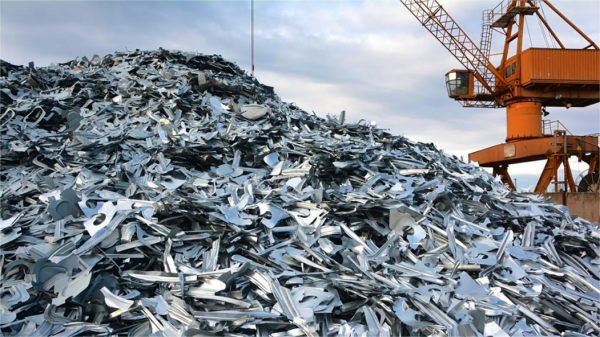
07. The role of private steel enterprises will become even more prominent
In recent years, under policy support, market forces, and innovation leadership, private steel enterprises have demonstrated strong vitality and resilience after undergoing capacity adjustments, green transitions, and technological upgrades. They have become an important force driving high-quality industry development and a key pillar of Chinese-style modernization. With the continuously improving business environment, stronger policy support, and enhanced legal protection, private steel enterprises are entering a new era of opportunity to explore their own "blue oceans" and fully demonstrate their capabilities.
After years of accumulation, private steel enterprises now play an increasingly important role in the industry. In 2024, private enterprises accounted for nearly 60% of crude steel capacity, and five private steel companies—Tsingshan Holding, Jingye Group, Shagang Group, Delong Group, and Jianlong Group—ranked among the 2024 Fortune Global 500.
During the 15th Five-Year Plan, the leadership role of private steel enterprises will be fully manifested. On the high-end track, they will continue to focus on breakthroughs in steel for new-energy vehicles and high-end specialty steels, empowering manufacturing upgrading with premium products. In green transformation, they will actively deploy hydrogen metallurgy and integrated wind-solar-storage systems to drive deep decarbonization of the industry.
At the same time, private steel enterprises will strengthen core competitiveness through industry–university–research collaboration, extend value boundaries through full-industry-chain strategic layout, and gain greater voice in global markets. Their flexible mechanisms and sustained innovation will become the core driving force for industry restructuring and upgrading, injecting stronger private-sector momentum into high-quality steel industry development.
08. Industrial-chain coordination and upstream–downstream coupling to build an ecosystem
As a basic materials industry, steel can strengthen supply-chain adaptability and risk resilience through integrated development and industrial-chain coordination. Against the backdrop of accelerating global supply-chain restructuring and China's push to build a new development pattern, promoting closer integration between steel and other industries, and transforming steel enterprises from traditional manufacturers into modern comprehensive service providers, has become a strategic choice to enhance competitiveness and achieve high-quality development, with major significance for optimizing the industry ecosystem and improving regional economic competitiveness.
To a large extent, steel enterprises are shifting from single production entities to builders of industrial-chain ecosystems. Through upstream–downstream coupling, the 15th Five-Year Plan will see the formation of multi-dimensional, deep industrial synergy. To enhance value added and competitiveness, Chinese steel companies are extending into upstream and downstream segments. These projects not only enrich the industry chain but also raise overall value added and competitiveness. At the same time, stronger upstream–downstream collaboration will help build a safe, resilient, and sustainable industrial ecosystem. Enterprises will strengthen collaborative innovation, carry out customized R&D around user needs, build platforms for integration of large, medium, and small firms, and jointly solve supply-chain bottlenecks, achieving integrated breakthroughs in "materials–components–equipment."
Cross-industry integration is also a key path to expanding value boundaries. Steel will be deeply integrated with construction, automotive, home appliances, and construction machinery industries to provide full-process services from material selection and product design to manufacturing, logistics, and recycling, jointly developing new products, processes, and applications. Integration with next-generation information technology and modern services will foster new business models, while diversified operations such as industrial tourism and cultural-creative design will enable resource sharing and value recreation.
Over the next five years, collaborative innovation will become the norm, driving deep coupling between steel and equipment manufacturing, new energy, and energy-saving and environmental-protection industries around the 15th Five-Year Plan goals of high-end and low-carbon development, forming a symbiotic industrial ecosystem.
09. International trade restructuring: China bids farewell to extensive exports
On December 12, the Ministry of Commerce and the General Administration of Customs jointly issued Announcement No. 79, clarifying that from January 1, 2026, export license management will be implemented for 300 HS-code steel products covering the entire chain from raw materials to intermediates and finished products.
This marks China's steel export management returning to the "license era" after 16 years and represents proactive regulation at a time when exports are poised to hit record highs, targeting the dual dilemmas of "volume growth with price decline" and rising trade friction.
Data from the China Metal Materials Circulation Association show that in the first half of 2025, steel export volume rose 9.2% year on year, but the average price fell 10.3% and total export value dropped 2.0%. Low-value-added billet exports doubled in volume while prices plunged 15.3%. The extensive "volume for price" model not only consumes domestic energy and environmental resources but also triggers trade barriers—since 2024, China's steel industry has faced more than 50 anti-dumping cases, with some countries imposing tariffs as high as 38.02%.
In the short term, the "license requirement" may cause pain for companies reliant on volume expansion, but in the long run it will end disorderly competition and push China's steel industry from being a "large exporter" to a "strong exporter." During the 15th Five-Year Plan, steel companies will accelerate overseas plant construction and localized production, deepen their presence in Southeast Asia and Africa, and transition from "product going abroad" to "industry going abroad" and "technology going abroad," capturing opportunities in the reshaped global trade landscape with high-quality and green products and services.
10. A significant increase in iron ore self-sufficiency
Iron ore is a critical foundation and raw material for China's steel industry, with demand mainly driven by steel production. During the 14th Five-Year Plan, China implemented dual control over steel capacity and output, leading to a gradual decline in pig iron production and corresponding iron ore demand. According to the National Bureau of Statistics, in 2024, China produced 852 million tons of pig iron, requiring about 1.346 billion tons of iron ore, down 2.3% year on year.
As a strategic mineral, domestic iron ore will continue to play a stabilizing role, with resource security steadily improving. The "Iron Resources Development Plan" is being accelerated, with major new large-scale mines, resource replacement projects, and mine upgrades coming online, boosting domestic output. However, most projects are being built in two phases, and some existing mines face depletion or shutdowns, limiting short-term growth. In 2025, China's iron ore raw ore output is expected to remain above 1 billion tons, with finished ore output exceeding 300 million tons, rising to 400 million tons by 2030. Some import growth will be replaced by domestic production, reducing external dependence. By 2030, imports are expected to fall to about 700–800 million tons (including equity ore). In the long term, with declining demand and rising domestic supply, self-sufficiency could increase by about 20 percentage points.
From a supply–demand perspective, surplus conditions will persist during the 14th Five-Year Plan, with average import prices expected to range between USD 90 and 110 per ton. Guinea's Simandou mine is scheduled to start production between late 2025 and early 2026 and reach full capacity around five years later, producing up to 120 million tons annually, keeping the market well supplied and potentially exerting downward pressure on prices. Looking ahead, as ore grades decline globally and energy and resource costs rise, marginal costs will increase, leading to the exit of high-cost mines and a gradual return to market balance, with prices fluctuating upward.
During the 15th Five-Year Plan, dual drivers of domestic resource expansion and overseas equity ore output will continue to raise self-sufficiency, reduce reliance on imports, and strengthen resource security. Together with structural optimization of steel demand, China's iron ore industry will achieve high-quality development and better support the steel industry's low-carbon upgrading.
Conclusion
Overall, the 15th Five-Year Plan will be a decisive period for the steel industry's comprehensive transition toward high-quality development. These ten trends are intertwined, driving a deep transformation from scale to quality, from high carbon to low carbon, and from products to ecosystems, ultimately strengthening the foundation of the real economy.
Facing new opportunities and challenges, only by proactively embracing change and making precise strategic moves can steel enterprises seize the initiative in the next five years of industrial restructuring and write a new chapter in China's transformation from a large steel producer to a strong one.
Feel free to contact us anytime for more information about the EAF Steel market. Our team is dedicated to providing you with in-depth insights and customized assistance based on your needs. Whether you have questions about product specifications, market trends, or pricing, we are here to help.
No related results found




0 Replies