




【Artificial Graphite Exports】"Customs-Clearance Challenge" — Who Should Apply for the License?

The rapid growth of the EV and energy storage industries is boosting demand for high-performance lithium batteries, driving the market for quality petroleum coke and synthetic graphite. The quality and particle size of calcined petroleum coke directly affect synthetic graphite performance, especially in anode production.
【Artificial Graphite Exports】"Customs-Clearance Challenge" — Who Should Apply for the License?
On the stage of global trade, every shipment's export can be like a "customs-clearance game." Especially for products involving dual-use items and technologies, such as artificial graphite, the export process becomes even more complicated.
Recently, we received a typical case:
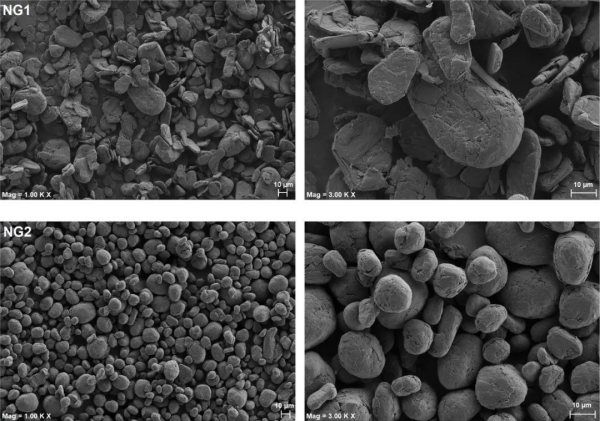
A domestic manufacturer exports artificial graphite to a bonded comprehensive zone, and a logistics company inside the zone declares the export to overseas destinations in the form of a filing list.
The questions arise:
Does this shipment need to apply for a Dual-Use Items and Technologies Export License?
If yes, at which stage should it be applied for?
Which company should apply?
First Checkpoint:
Is a License a "Mandatory Option" for Artificial Graphite Exports?
The answer is: Yes, it is mandatory.
According to the Administrative Measures for Import and Export Licenses of Dual-Use Items and Technologies, artificial graphite belongs to dual-use items, and an export license for dual-use items and technologies must be obtained when exporting it overseas.
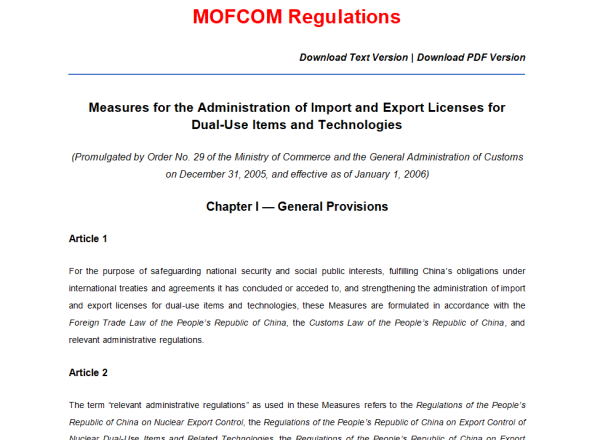
Relevant provisions:
Any import or export, as well as transit, transshipment, or through-transport of dual-use items and technologies listed in the Control List, must apply for a dual-use items and technologies import or export license;
The movement of dual-use items and technologies between overseas locations and bonded zones, export processing zones, and other special customs supervision areas or bonded premises is subject to the preceding provision;
The movement of dual-use items and technologies between domestic areas and bonded zones, export processing zones, and other special customs supervision areas or bonded premises, or between the above-mentioned customs supervision areas and bonded premises, does not require a dual-use items and technologies import or export license.
Therefore, as long as the goods are ultimately exported overseas, the license is an unavoidable "checkpoint."
A Small Case in Point
A Company "Tried to Sneak Through" but Was Exposed by Customs and Fined RMB 24,000!
Recently, Tianjin Xingang Customs inspected a batch of export goods declared as "carburizer" and discovered hidden problems.
Twenty-one tons of "carburizer" turned out to be export-controlled items!
A company declared an export of 21 tons of carburizer to Tianjin Xingang Customs under general trade, with HS code 3824993000 (no export tax rebate, no regulatory conditions), FOB total value USD 23,100.
Everything looked normal, but customs officers detected something unusual during inspection.
With keen eyes, the "disguise" was uncovered, and laboratory testing revealed the truth!
Based on their experience and sharp judgment, customs officers found discrepancies between the goods and the declared "carburizer," so they took samples for testing. The results were shocking:
The goods were actually artificial graphite, which should be classified under HS code 3801100040 (no export tax rebate; export requires a dual-use items and technologies export license).
Exporting controlled items without authorization resulted in a RMB 24,000 fine.
Customs reminder:
Enterprises should fully understand relevant laws and regulations before export to ensure that exported goods comply with national export control policies.
Do not take chances by misdeclaring or concealing goods to evade customs supervision.
Customs will strictly crack down on all illegal and non-compliant activities to maintain normal import and export order.
Second Checkpoint:
At Which Stage Should the License Be Applied?
The key question is: when goods move from the domestic area to the bonded comprehensive zone, and then from the bonded zone to overseas, at which stage is the license required?
From domestic area to bonded comprehensive zone: this stage belongs to domestic circulation; the goods are not yet actually exported overseas, so no license is required.
From bonded comprehensive zone to overseas: this stage is a cross-border export; the goods formally leave China's customs territory, so a license must be obtained.
Therefore, the license must be applied for when the goods are exported from the bonded comprehensive zone to overseas.
Third Checkpoint:
Who Should "Carry the Flag" and Apply for the License?
This issue is somewhat complex; let us clarify it step by step:
Domestic manufacturer: it only ships the goods to the bonded comprehensive zone, which is a domestic trade link and does not involve cross-border export, so it does not need to apply for the license.
Logistics company inside the zone: it is the actual entity exporting the goods overseas and declares the export in the form of a filing list, so this company must apply for the license.
Simply put, the logistics company in the bonded zone is the main player in this "customs-clearance game" and must take responsibility for applying for the license.
Fourth Checkpoint:
How to Successfully "Clear Customs"?
Since the logistics company inside the zone is the applicant for the license, what preparations are required?
Required documents:
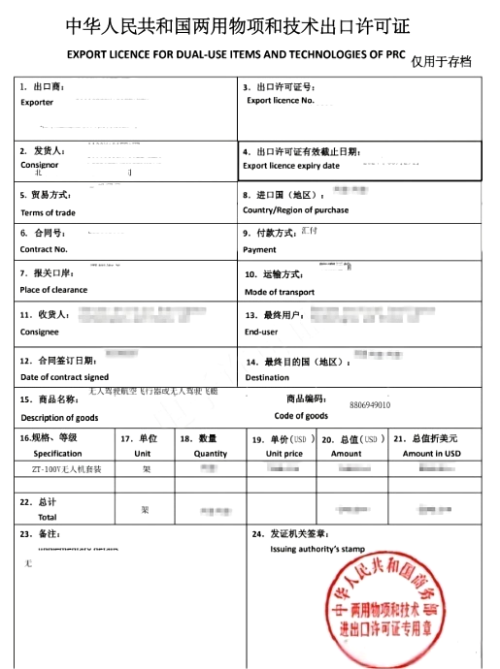
Application form for the Dual-Use Items and Technologies Export License;
Export contract;
End-user and end-use statement (in both Chinese and English);
Copy of the company's business license;
Other documents that may be required (such as technical descriptions, etc.).
Application methods:
Apply online through the Ministry of Commerce's unified business system platform;
Or submit paper materials to the provincial commerce authority.
Processing time:
Usually 3 working days, but the actual time may vary depending on region and completeness of documents.
Notes:
The license is generally valid for one year, and export must be completed within the validity period;
The original license must be submitted to customs at the time of export, and the customs declaration documents must be consistent with the license contents.
Summary: The Complete "License Clearance" Guide
Is a license required?
Yes. Artificial graphite is a dual-use item, and a license is required when exporting overseas.
At which stage should it be obtained?
When the goods are exported from the bonded comprehensive zone to overseas.
Which company should apply?
The logistics company B inside the zone.
How to apply?
Prepare all required documents and apply through the Ministry of Commerce system or the provincial commerce department.
★Warm reminder★
Exporting dual-use items and technologies is a serious matter. Any negligence may lead to cargo detention or return. Enterprises are advised to understand the relevant policies in advance, prepare all required documents, and consult professional agents or local commerce authorities if necessary to ensure smooth "customs clearance."
Do Not Forget — There Is Also the
U.S. Tariff Issue!
The list of U.S. additional tariffs on China is growing longer, but one key material has been "given special treatment" — artificial graphite.

The United States has postponed the 25% tariff on Chinese graphite until 2026.
Why has the U.S. shown "leniency" toward Chinese artificial graphite?
What kind of strategic game and helplessness lies behind this?
How should Chinese companies seize this opportunity?

I. Why the U.S. Postponed Tariffs on Chinese Graphite — The Reasons Are Thought-Provoking
Irreplaceability of Chinese graphite
China is the world's largest producer of artificial graphite, accounting for 93% of global supply. Especially in the electric vehicle battery sector, artificial graphite is a critical material, and the U.S. cannot find alternative sources in the short term.
Deterrent power of China's export controls
In 2023, China included high-purity, high-strength, and high-density artificial graphite and its products in the export control list, requiring licenses for export. This policy further intensified U.S. dependence on Chinese graphite.
Strong demand from U.S. companies
U. S. companies such as Tesla have repeatedly requested the government to extend tariff exemptions on Chinese graphite, citing that graphite is an essential material in the U.S. electric vehicle industry chain.
II. How Should Chinese Companies Seize the Opportunity?
Compliant exports and risk avoidance
When exporting artificial graphite, companies must obtain the Dual-Use Items and Technologies Export License and strictly comply with relevant regulations to avoid fines or cargo detention caused by violations.
Enhance technology and competitiveness
Chinese companies should increase R&D investment to improve the performance and added value of artificial graphite in order to cope with future international competition.
Expand markets and reduce dependence
While consolidating the U.S. market, Chinese companies should actively explore emerging markets such as Europe and Southeast Asia to reduce dependence on a single market.
III. Future Outlook: How Will the Graphite Game Evolve?
Tariff postponement is only a stopgap
The U.S. postponement of tariffs on Chinese graphite does not mean it has abandoned suppression. After 2026, tariff policies may be adjusted again, and Chinese companies must prepare in advance.
Reconstruction of the global supply chain
As countries place greater emphasis on critical materials, the global graphite supply chain may be reshaped. Chinese companies should actively participate in international cooperation to safeguard their interests.
Technological innovation is the key
In the future, competition in the graphite industry will become even more intense. Only by mastering core technologies can companies remain invincible in this strategic game.
Feel free to contact us anytime for more information about the Anode Material market. Our team is dedicated to providing you with in-depth insights and customized assistance based on your needs. Whether you have questions about product specifications, market trends, or pricing, we are here to help.
No related results found




0 Replies