




【Full Market Overview of Calcined Petroleum Coke】Revenue of USD 12.169 Billion in 2025...

【Full Market Overview of Calcined Petroleum Coke】Revenue of USD 12.169 Billion in 2025, Targeting USD 13.519 Billion by 2032, Advancing Steadily at a 1.5% CAGR
Latest Market Research Report
PART 1
Product Definition and Applications
Calcined petroleum coke is a high-quality carbon material produced by heating raw petroleum coke to remove volatile substances and impurities. It is commonly used as a carbon additive in the production of aluminum, steel, and other metals. The calcination process involves heating raw coke to temperatures between 1200 and 1400°C, thereby removing volatile compounds and leaving behind relatively pure carbon material.
PART 2
Global Market Size
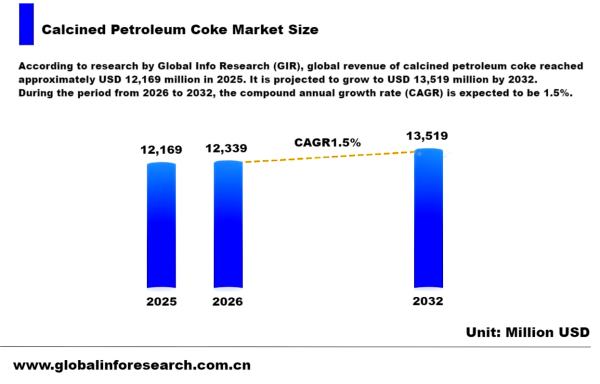
According to the latest report by Global Info Research titled "Global Calcined Petroleum Coke Market Size, Manufacturers, Regions, Product Types and Application Segments, 2026", the global calcined petroleum coke market revenue was approximately USD 12,169 million in 2025 and is expected to reach USD 13,519 million by 2032. The compound annual growth rate (CAGR) is projected to be 1.5% during the period from 2026 to 2032.
PART 3
Manufacturer Ranking and Market Share
(Based on 2025 research data; the latest data is subject to our company's most recent research findings)
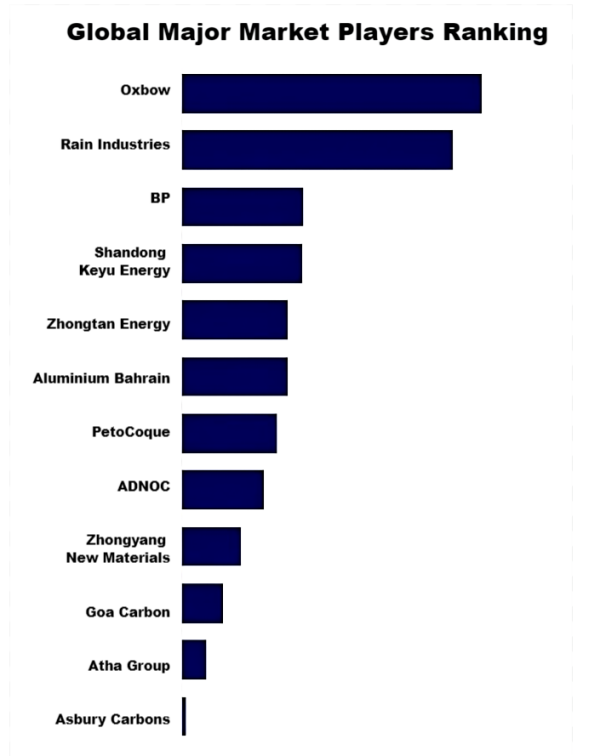
According to research conducted by the Global Info Research Leading Enterprise Research Center, the major global producers of calcined petroleum coke include Oxbow, Rain Industries, BP, Shandong Keyu Energy, Zhongtan Energy, Aluminium Bahrain, PetroCoque, Adnoc, Zhongyang New Materials, and GOA Carbon. In 2025, the top five manufacturers accounted for approximately 14.0% of the global market share.
PART 4
Market Segmentation
Global Market Size by Product Type
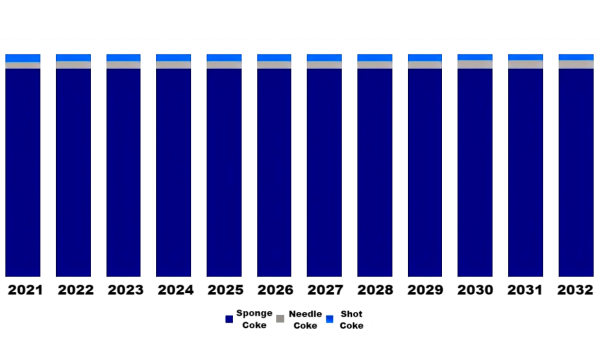
In terms of product types, sponge coke is currently the dominant segment, accounting for approximately 93.7% of the market share.
Global Market Size by Application
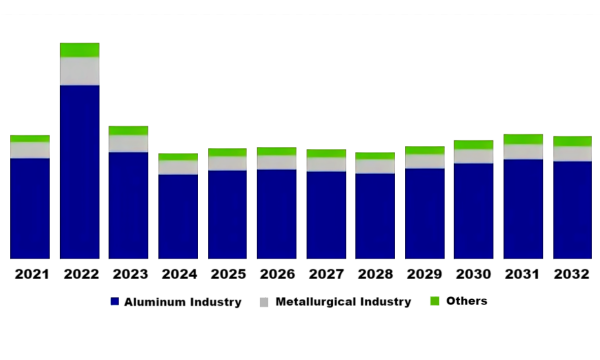
In terms of applications, the aluminum industry remains the largest demand source, accounting for approximately 80.3% of total consumption.
Primary aluminum continues to be the largest demand driver for calcined petroleum coke (CPC), as CPC is the primary solid carbon component in prebaked anodes used in the Hall-Héroult smelting process. Anode consumption is directly related to smelter operational efficiency and current efficiency. As smelters increasingly pursue higher energy efficiency and more stable electrolytic cell operations, they have become more sensitive to CPC stability—particularly properties affecting anode resistivity, density/porosity, and reactivity. As a result, the market increasingly favors suppliers capable of providing consistent anode-grade materials, rather than merely supplying spot coke.
The second driving factor is the tightening quality requirements for anode-grade raw materials due to changes in refining systems. Petroleum coke is a by-product of residue upgrading (not a purpose-produced material), meaning that crude oil composition and refining processes directly influence sulfur and metal content in coke. Industry and technical literature indicate that trends toward heavier and higher-sulfur crude oils, as well as evolving refining technologies, may lead to higher impurity levels and impact the availability of premium anode-grade feedstock. This has prompted refineries to adopt more blending strategies and impose stricter qualification requirements on raw materials. Consequently, the quality gap between anode-grade CPC and lower-value CPC has widened, making specification control a key lever for profitability.
Within the metallurgical value chain, CPC demand is largely driven by recarburization needs in steelmaking and foundries. CPC is widely used to adjust carbon chemistry, and customers increasingly focus on absorption performance, impurity effects, and melt consistency—especially under scrap-based steelmaking processes and stricter quality requirements that demand enhanced process control. Technical literature on steelmaking clearly identifies calcined petroleum coke as a commonly used recarburizer (in some regions replacing other carbon sources), while foundry research explores petroleum coke/anthracite-derived carburizers as engineering tools for controlling cast iron quality.
A newer and faster-growing driver exists within the battery materials ecosystem. Synthetic graphite used in lithium-ion battery anodes can be produced from carbon precursors including calcined petroleum coke and pitch. The expansion of synthetic graphite capacity (along with battery supply chain localization) is generating incremental demand for qualified, traceable, and stable CPC feedstocks. Industry analyses describe synthetic graphite production routes using CPC and/or coal tar pitch, while lifecycle datasets and recent environmental studies highlight that CPC-based synthetic graphite has become a mature industrial pathway. As a result, the adoption of electric vehicles and investment in battery supply chains are increasingly translating into demand for higher-purity and more consistent carbon precursors.
In addition to metals and batteries, the titanium dioxide (TiO₂) pigment industry—particularly the chloride process—represents another important industrial driver. In this process, petroleum coke is used as a reducing agent during high-temperature chlorination to produce titanium intermediates. Since TiO₂ demand is closely linked to end-use sectors such as coatings and plastics, this application provides relatively stable consumption even during downturns in metal cycles. It also tends to favor suppliers capable of meeting specific carbon and impurity requirements.
This article is extracted from the report "Global Calcined Petroleum Coke Market Size, Manufacturers, Regions, Product Types and Application Segments, 2026" published by Global Info Research. It provides an in-depth analysis of the calcined petroleum coke market using professional research methodologies and further examines the impact of U.S. tariff policies and corresponding measures by various countries, including regional economic performance and supply chain dynamics.
Feel free to contact us anytime for more information about the calcined petroleum coke market. Our team is dedicated to providing you with in-depth insights and customized assistance based on your needs. Whether you have questions about product specifications, market trends, or pricing, we are here to help.
No related results found




0 Replies